
This summer, the Arctic STEM Communities project, funded by the European Union's Northern Periphery Programme (NPA Interreg), under priority 3, was launched. The project is managed by STEM Húsavík, with support from the Innovation Network of Þingeyjar, and was also the first project to receive a grant under the programme's new priority, which focuses on strengthening cooperation between institutions in the Arctic. In addition to Iceland, the participating countries are Finland and Ireland.
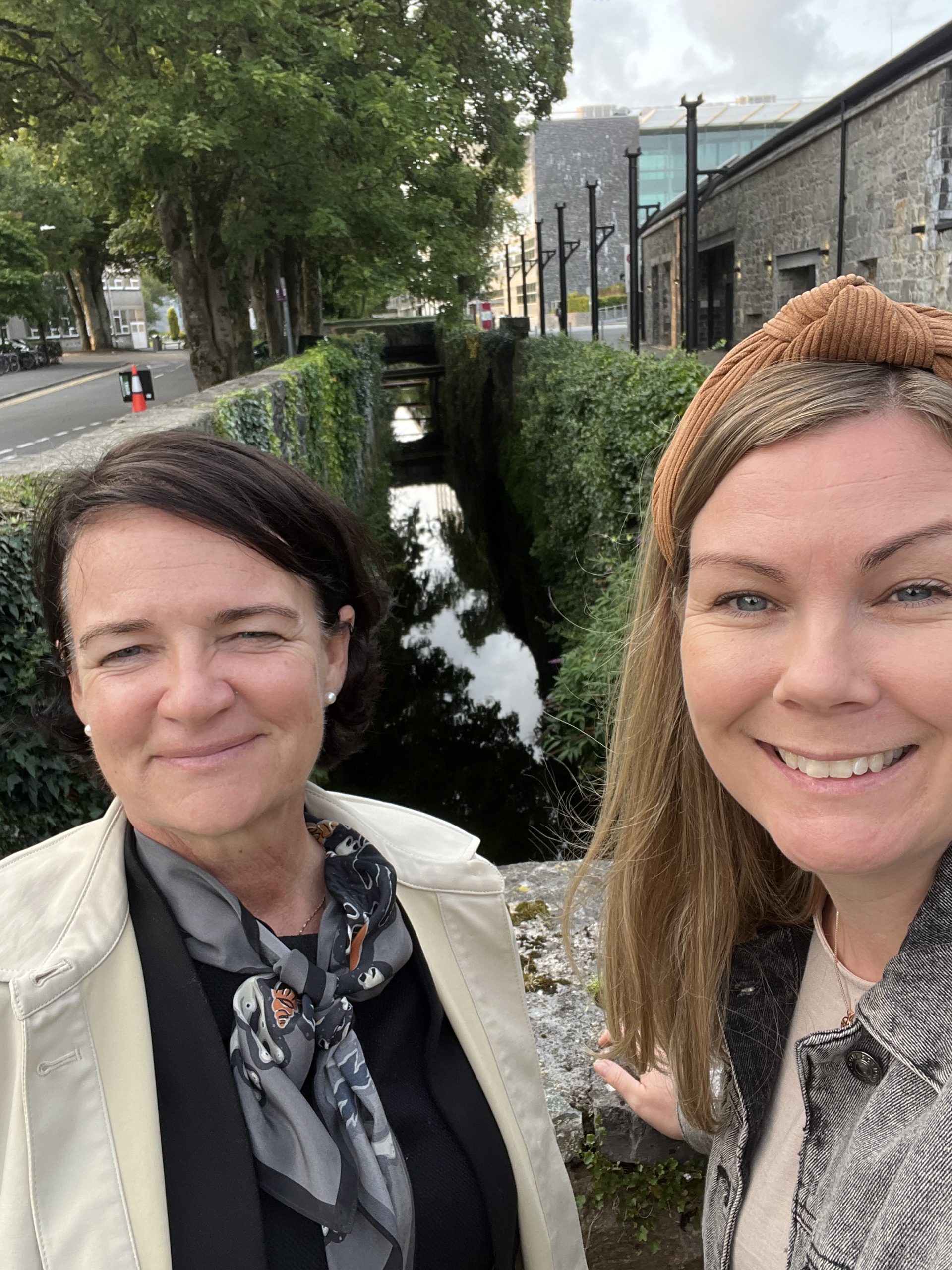
The project is about establishing a community-based STEM or STEAM learning ecosystem in two new communities in the Arctic, as well as specifically analysing the situation of girls and women in STEM. Each community, including Húsavík, is also undertaking a development project focusing on supporting women and girls in STEM. The University of Galway and the prestigious LUMA organisation in Finland are participants in the project, alongside STEM Húsavík, which is leading the initiative. Recently, the project manager, Huld Hafliðadóttir, and project specialist, Bridget Burger, travelled to Galway where the implementation phase of the project was worked on. In November, they will travel to Rovaniemi in Lapland, where the same process will take place.
The project involves replicating the process that was carried out in Húsavík, although it will naturally look different in another community. The foundation, however, is the same: to provide a professional framework that supports STEM and STEAM education both within and beyond the walls of traditional educational institutions. Both of these partners, Galway and LUMA, build on previous experience and a strong foundation in STEM focus, but this work nevertheless deepens what already exists and connects the various stakeholders working to enhance STEM education, who were not previously in much communication.
Huld will also present the project at the NPA Interreg conference in Skellefteå, the "science city", in Sweden in November, entitled NORTHERN SKILLS: Navigating the Future NPA, which focuses on the skills required in the future labour market.
The conference looks at how collaborative projects and communities in the Arctic can support these updated skills and attract and retain the workforce needed for the workplace of the future. This aligns very well with the work that has been developed in Húsavík, including raising awareness of STEM in the community and the importance of STEM education.
It is a great honour for STEM Húsavík, with support from the Thingeyrar Knowledge Network, to lead the project, which can be seen as the beginning of even greater cooperation between institutions in the Arctic to build strong and active STEM and STEAM learning ecosystems.
